

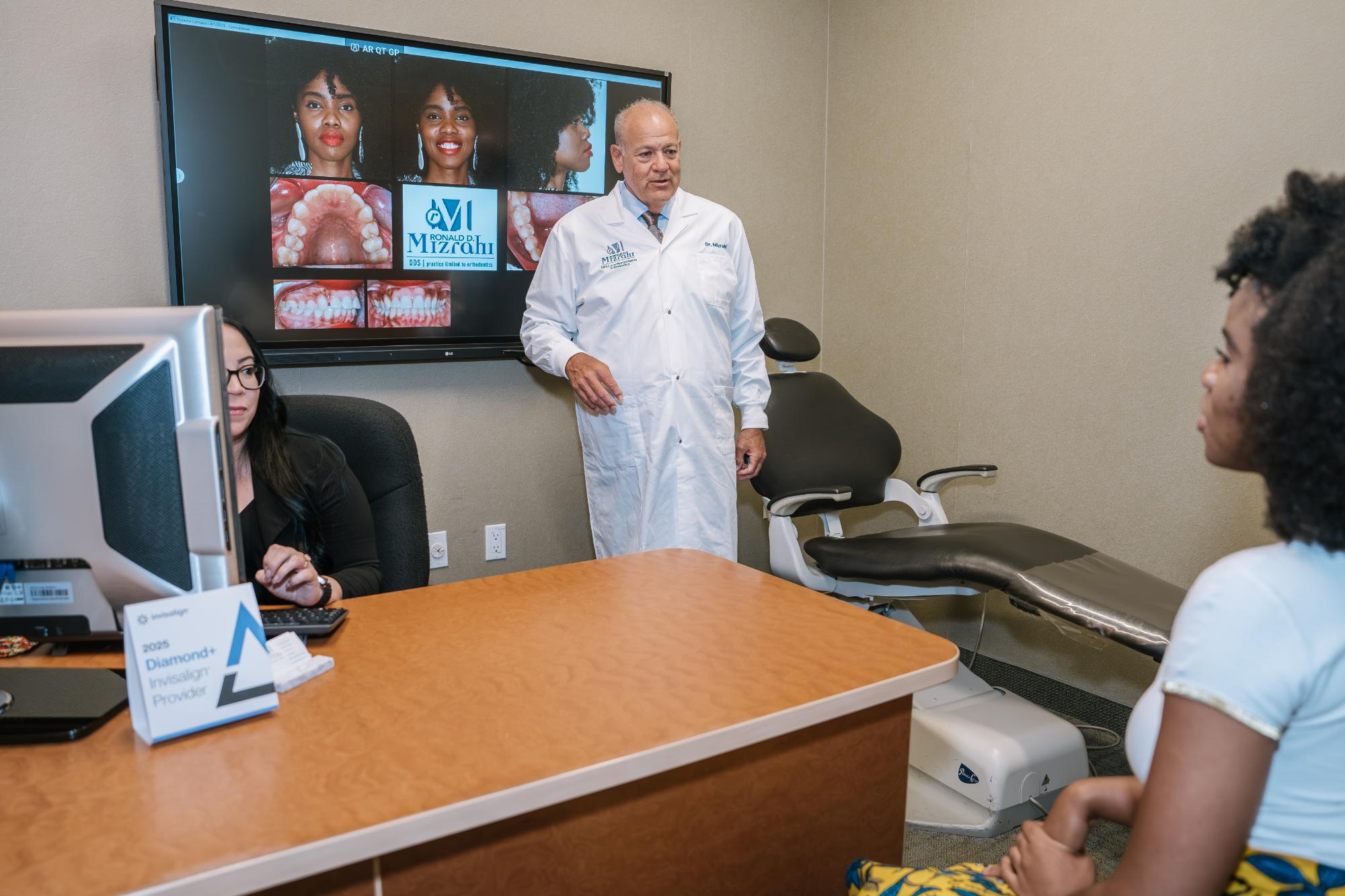
If you’ve ever wondered why one person gets braces while another gets clear aligners—or why two people with seemingly similar crooked teeth can have completely different treatment plans—the answer is simple: every smile is different.
At Mizrahi Orthodontics in Brooklyn, NY, we believe orthodontic treatment should never be a one-size-fits-all process. Your teeth, bite, jaw development, facial structure, and treatment goals are unique to you. That’s why your orthodontic treatment plan should be personalized around your individual needs.
Whether you’re considering traditional braces, clear aligners, or orthodontic treatment for your child, understanding why treatment plans differ can help you feel more confident about your orthodontic journey.
What Is an Orthodontic Treatment Plan?
An orthodontic treatment plan is a customized roadmap for moving your teeth and improving your bite.
Before recommending treatment, an orthodontist evaluates much more than whether your teeth look straight. A comprehensive orthodontic evaluation can include an assessment of:
- Tooth position and alignment
- Crowding and spacing
- Overbites and underbites
- Crossbites
- Open bites
- Jaw position and development
- Facial growth and symmetry
- Tooth eruption
- Existing dental work
- Your age and stage of development
- Your personal treatment goals
Based on this information, your orthodontist can determine which treatment options are appropriate and how they should be approached.
Why Can’t Everyone Have the Same Orthodontic Treatment?
It’s tempting to think that crooked teeth simply need to be “straightened.” But orthodontics is about much more than creating a straight row of teeth.
Your teeth need to work together properly when you bite, chew, and speak. Your upper and lower jaws also need to work together, and the position of your teeth can affect the overall function and appearance of your smile.
Two patients may both have crowded teeth but have completely different causes of that crowding.
For one patient, there may be enough room to align the teeth without significant additional intervention. Another patient may have a more complicated bite, jaw relationship, or tooth eruption pattern that requires a different approach.
The goal isn’t simply to move teeth. It’s to create a healthy, functional, stable smile that fits the individual patient.
Your Bite Matters Just as Much as Straight Teeth
One of the most important reasons treatment plans vary is the patient’s bite.
Orthodontists evaluate how the upper and lower teeth come together. Problems such as an overbite, underbite, crossbite, or open bite can require different treatment approaches.
For example, someone with an overbite may need a different strategy than someone with an underbite—even if both patients have otherwise straight-looking teeth.
A personalized treatment plan takes the entire bite into consideration rather than focusing only on the front teeth.
Age Can Affect Your Treatment Plan
Age is another important factor when developing an orthodontic treatment plan.
Children
Children’s jaws and facial structures are still developing, which can make timing an important consideration. In some cases, an orthodontist may recommend monitoring a child’s growth before beginning treatment. In other cases, early orthodontic treatment may be beneficial.
The American Association of Orthodontists recommends that children have their first orthodontic check-up by age 7.
Teens
Teenagers are often in an ideal stage for comprehensive orthodontic treatment because many or all of their permanent teeth have erupted while they are still growing.
Braces or clear aligners may be recommended depending on the patient’s specific orthodontic needs.
Adults
It’s never too late to improve your smile. Adults can benefit from orthodontic treatment as well, although their treatment plans may need to account for factors such as previous dental work, gum health, missing teeth, or changes that have occurred over time.
At Mizrahi Orthodontics, adult orthodontic treatment can be customized around both your dental needs and your lifestyle.
Braces vs. Clear Aligners: Why the Choice Is Different for Everyone
Patients often come into an orthodontic consultation already knowing whether they want braces or clear aligners.
While patient preference is important, the best treatment option also depends on the individual case.
Traditional Braces
Braces use brackets and wires to gradually move teeth into better positions. They can be an excellent option for a wide range of orthodontic concerns, including more complex cases.
Clear Aligners
Clear aligners are removable trays designed to gradually move teeth. They can be a convenient and discreet option for many patients.
However, clear aligners aren’t automatically the best choice for every orthodontic problem.
An orthodontist needs to evaluate your specific bite, tooth movements, treatment goals, and ability to wear aligners as directed before determining whether they’re appropriate.
The most important question isn’t “Which treatment is more popular?”
It’s “Which treatment is right for me?”
Why X-Rays and Digital Scans Matter
Orthodontists need more information than what can be seen by simply looking at your smile.
Diagnostic records can help your orthodontist evaluate the position of teeth, roots, jaws, and developing permanent teeth.
At Mizrahi Orthodontics, advanced technology such as digital scanning can help create a detailed picture of your teeth and bite. Digital scans can also provide a comfortable alternative to traditional physical impressions for many patients.
This information helps the orthodontic team develop a treatment plan based on your individual anatomy rather than making assumptions based solely on appearance.
Your Treatment Goals Matter, Too
Orthodontic treatment isn’t only about clinical measurements.
Patients also have personal goals.
Maybe you’re getting married and want to feel confident in your smile. Maybe you’re a parent looking for orthodontic treatment for your child. Maybe you’ve had braces before and your teeth have shifted. Or perhaps you’ve always wanted to straighten your teeth but never had the opportunity.
Your orthodontist can consider these goals when discussing treatment options.
For adults especially, factors such as work, school, travel, social events, and lifestyle may influence which treatment option feels most practical.
Treatment Time Can Vary From Patient to Patient
Another common question is:
“How long will I need braces?”
There isn’t one universal answer.
Treatment time depends on factors including:
- The complexity of the orthodontic problem
- The amount of tooth movement needed
- The patient’s age and growth
- The type of treatment
- How consistently the patient follows instructions
- Attendance at scheduled appointments
- Oral hygiene
- The patient’s individual biological response to treatment
Some patients may complete treatment relatively quickly, while others require more time.
Your orthodontist can provide an estimated treatment timeline after evaluating your individual smile.
Why Following Your Orthodontist’s Instructions Matters
Even the best treatment plan requires cooperation from the patient.
If you have braces, maintaining good oral hygiene and following instructions about elastics, appliances, or appointments can help keep treatment progressing.
If you’re wearing clear aligners, wearing them for the recommended amount of time and changing trays according to your orthodontist’s instructions is essential.
Missed appointments, broken appliances, poor oral hygiene, or inconsistent aligner wear can potentially affect treatment progress.
Your orthodontist creates the plan—but you play an important role in making the plan successful.
Orthodontics Is About More Than Cosmetic Changes
Many people seek orthodontic treatment because they want a straighter smile, but orthodontics can involve much more than aesthetics.
Correcting certain bite and alignment problems can improve the way teeth function together and make them easier to maintain.
A personalized orthodontic treatment plan considers both the appearance and function of your smile.
That’s why copying someone else’s treatment—or assuming that the treatment that worked for a friend will work for you—doesn’t make sense.
Your smile deserves its own plan.
Why Personalized Orthodontic Care Matters
At Mizrahi Orthodontics, we don’t believe in treating every patient exactly the same.
Every patient walks through our Brooklyn office with a different combination of dental anatomy, orthodontic concerns, lifestyle considerations, and goals.
Our job is to evaluate those factors and develop an individualized treatment approach.
Whether you’re looking for braces in Brooklyn, clear aligners in Brooklyn, orthodontic treatment for your child, or adult orthodontic care, a personalized consultation is the first step toward understanding your options.
Your Smile Is Unique. Your Treatment Should Be, Too.
There is no universal orthodontic treatment plan because there is no universal smile.
The right treatment depends on your teeth, bite, jaws, growth, oral health, goals, and individual circumstances. That’s why a thorough orthodontic evaluation is so important before deciding which treatment is right for you.
If you’re considering orthodontic treatment in Brooklyn, NY, the team at Mizrahi Orthodontics can evaluate your smile and discuss personalized treatment options.
Ready to start your smile journey? Contact Mizrahi Orthodontics to schedule an orthodontic consultation in Brooklyn and find out which treatment approach is right for you.